
Driveway pressure washing
Driveway Cleaning Ipswich
Block paving, concrete and paved drives cleaned back to the surface underneath — with the jointing sand put back where cleaning has disturbed it.
A driveway takes more punishment than any other surface at a property. It sits in the open, holds rainwater, carries vehicle weight daily and picks up whatever drips, blows or grows onto it. On most Ipswich drives the result is the same combination: a green film of algae across the surface, moss and weed growth along the joints and edges, tyre marks near the gate and a general darkening that makes the paving look ten years older than it is.
Surfaces we clean
- Block paving — the most common drive surface locally, and the one where the joints matter as much as the blocks.
- Concrete — poured, brushed and imprinted concrete, plus older concrete aprons and hard-standing.
- Paved and slabbed drives — larger format slabs and mixed paving on shared accesses.
- Selected resin-bound surfaces — cleaned at low pressure where the system and its condition make that sensible.
What comes off
Moss, algae, lichen film, weed growth in the joints, general grime, tyre marks and the black staining that builds up where water sits. What does not always come off is the honest part: old oil that has soaked into porous concrete, rust staining, paint and cement splashes from past building work, and discolouration where a slab has physically weathered. Those get pointed out when the job is quoted rather than discovered afterwards.
Why re-sanding usually follows
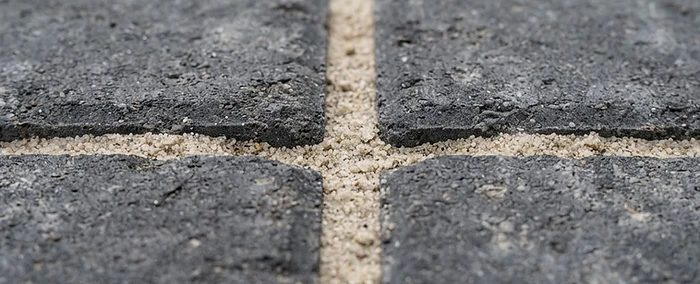
Block paving works because each block is held in place by sand in the joints. That sand also holds moss spores, weed seed and years of dirt — so cleaning takes a good deal of it out. Leaving open joints looks fine for a fortnight and then causes problems: blocks lose their interlock, edges start to shift and weeds return quickly because there is nothing filling the gap.
So re-sanding is a normal part of cleaning block paving rather than an extra we invent. Once the surface has dried, kiln-dried sand is spread and brushed in until the joints are full, then compacted or settled so it does not simply wash straight back out. Details are on the re-sanding and sealing page.
Sealing is optional
Sealing a drive can reduce how much the surface absorbs, make the next clean easier and help stabilise jointing sand depending on the product used. It is not something every drive needs, and it should only be considered once the paving is clean and suitably dry. Some surfaces are not suitable at all. If sealing would not do much for your drive, we will say so.
Around Ipswich
The newer block-paved drives on estates around Whitehouse, Castle Hill, Kesgrave and Broke Hall tend to need joint work as much as surface cleaning. Older concrete and slabbed drives across Chantry, Whitton, Maidenhall and Gainsborough are usually about grime, moss and slip risk in the shaded sections down the side of the house.
Before & After
Driveway Cleaning — Before & After
Typical before-and-after examples, not photographs of specific completed jobs.

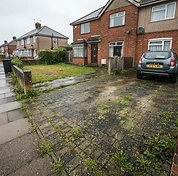 Before
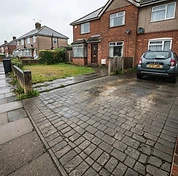 After
AfterBlock Paving Driveway
Block paving with moss and dirt through the joints before cleaning.
After pressure cleaning, with the block colour more visible and the paving ready for re-sanding.

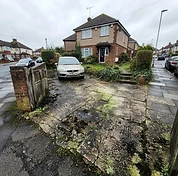 Before
 After
AfterConcrete Driveway
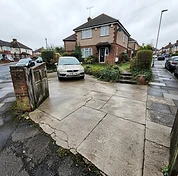
Concrete driveway with years of traffic dirt, moss and staining.
After cleaning, with a more even surface and built-up grime removed.
Related work
Get your driveway quoted
Send photos of the drive and your Ipswich postcode. We will confirm the surface type, whether re-sanding is needed and what it will cost.
Send photos for a quote