
Block paving specialist work
Block Paving Cleaning Ipswich
Cleaning block paving is as much about the joints as the blocks. Done properly it is a sequence: clear the growth, clean the surface, let it dry, then put the sand back.
Block paving is the standard drive surface on most Ipswich estates built in the last thirty years, and it fails in a predictable way. Fine dirt collects in the joints, holds moisture and gives moss and weed seed somewhere to root. Algae spreads across the block faces, particularly on the shaded half of the drive. Within a few years a red or charcoal drive reads as a uniform grey-green, with green lines running along every joint.
What we are actually dealing with
- Weeds and moss between the joints — the visible symptom, and the reason the joints have lost their sand.
- Algae and surface grime — the film that dulls the block colour and makes the drive slippery when damp.
- Silt build-up — years of fine material sitting in the joints instead of clean sand.
- Localised staining — tyre marks, oil drips and leaf tannin, which respond differently to each other.
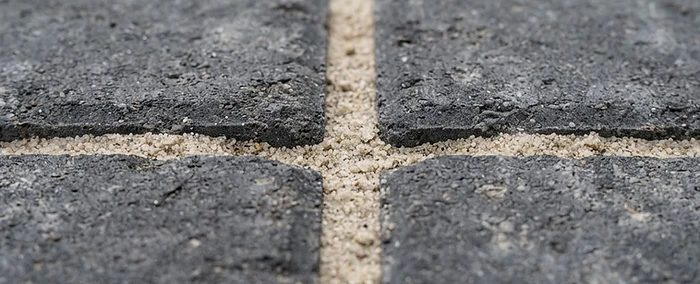
The sequence
Assess the paving
Block type, joint condition, any sunken or rocking blocks, edge restraints, drainage and where the water will run.
Clear growth from joints
Weeds, moss and root material removed from the joints and edges before the main clean, so it does not simply smear across the surface.
Clean the blocks
A rotary surface cleaner for an even pass across the field of the drive, then a controlled lance for edges, gullies and detail.
Rinse and clear debris
Silt and spoil flushed off the paving and cleared away rather than left in a ridge along the kerb or washed into a gully.
Let the joints dry
Sand will not brush into wet joints properly. Depending on weather this can mean waiting hours, or returning another day.
Re-sand the joints
Kiln-dried jointing sand spread, brushed in and settled until the joints are full and level.
Why excessive pressure is a problem here
Block paving relies on interlock. Each block is held by its neighbours and by the sand between them, with edge courses and kerbs restraining the whole field. Blast the joints too hard and you remove sand well below the surface, wear the block arrises, and in weak spots — beside a soakaway, along an unrestrained edge, or where the sub-base has settled — you can lift blocks entirely.
The aim is to remove what should not be there and leave the structure intact. That means measured pressure, an even pass and then a proper re-sand, rather than the hardest setting the machine offers.
Sealing: optional, not standard
Once clean and dry, block paving can be sealed. Depending on the product this may reduce absorption, make the next clean easier, lift the colour and help hold the jointing sand in place. It is a separate decision with its own cost, and it is not right for every drive — see re-sanding and sealing for the detail.
Local paving
Drives around Kesgrave, Rushmere, Broke Hall, Whitehouse and Purdis Farm are largely concrete block paving of one generation or another, and the joint condition varies wildly depending on whether anyone has re-sanded since it was laid. That is usually the first thing we look at.
Before & After
Block Paving — Before, Cleaned & Re-Sanded
Typical before-and-after examples, not photographs of specific completed jobs.

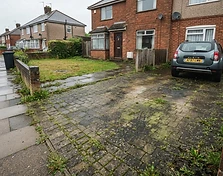 Before
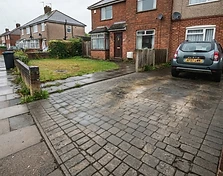 Cleaned
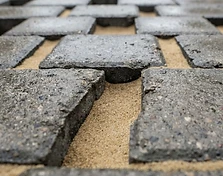 Re-sanded
Block paving with moss and dirt through the joints before cleaning.
After pressure cleaning, with the block colour more visible and joints clear.
After re-sanding, with kiln-dried sand brushed into the joints.
Cleaning block paving can remove some of the jointing sand, which is why re-sanding may be needed once the surface is suitably dry.
Before & After
Block Paving — Before & After
Typical before-and-after examples, not photographs of specific completed jobs.

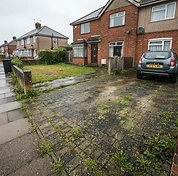 Before
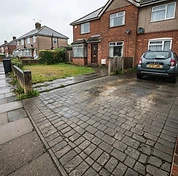 After
AfterBlock Paving Driveway
Block paving with moss, algae and weeds in the joints.
After cleaning, with the block colour restored and joints clear.
Related work
Block paving gone green?
Photos of the drive and your postcode are enough for a quote covering the clean and the re-sanding.
Send photos for a quote